
Science can involve concepts that are difficult to visualize through words alone. Film and cinematography provide powerful tools for showing natural phenomena, scientific processes, and technological developments in ways that audiences can easily observe. From documentaries to fictional films, visual storytelling can influence how people understand science and the world around them.
Visualizing Scientific Ideas
Here’s how:
Documentaries and Real-World Science
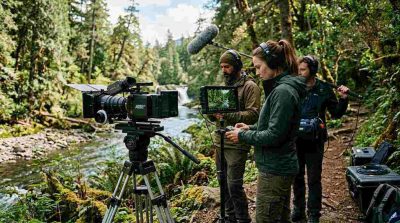 Scientific documentaries can use cameras, animation, time-lapse photography, and microscopic imaging to reveal things that people normally cannot see. A camera can capture animal behavior, geological changes, weather events, and other natural processes. These images can make scientific information more engaging while providing visual context.
Animation Explains the Invisible
Some scientific subjects cannot be filmed directly. Molecular processes, distant planets, and complex physical systems may require computer-generated imagery or animation. When used carefully, these techniques can help audiences visualize scientific concepts that would otherwise remain abstract.
Cinematography and Observation
Time-Lapse Techniques
Time-lapse photography can compress hours, days, or even months into a short sequence. This can reveal plant growth, changing landscapes, movement of clouds, or other gradual processes.
Slow Motion
Slow-motion footage can reveal details that happen too quickly for normal human observation. Movement, impacts, and biological processes can become easier to study when displayed at reduced speed.
Accuracy
Film can make science compelling, but visual storytelling should not replace scientific accuracy. Fictional productions may simplify or alter scientific concepts for dramatic purposes. Audiences can therefore benefit from distinguishing entertainment from evidence-based scientific information.
Conclusion
Cinematography offers unique ways to communicate science by showing processes that are distant, microscopic, extremely fast, or extremely slow. Through documentaries, animation, time-lapse, and other techniques, film can make scientific ideas more understandable and memorable while encouraging audiences to explore the subjects further.